







By Martin Baryaruha Junior
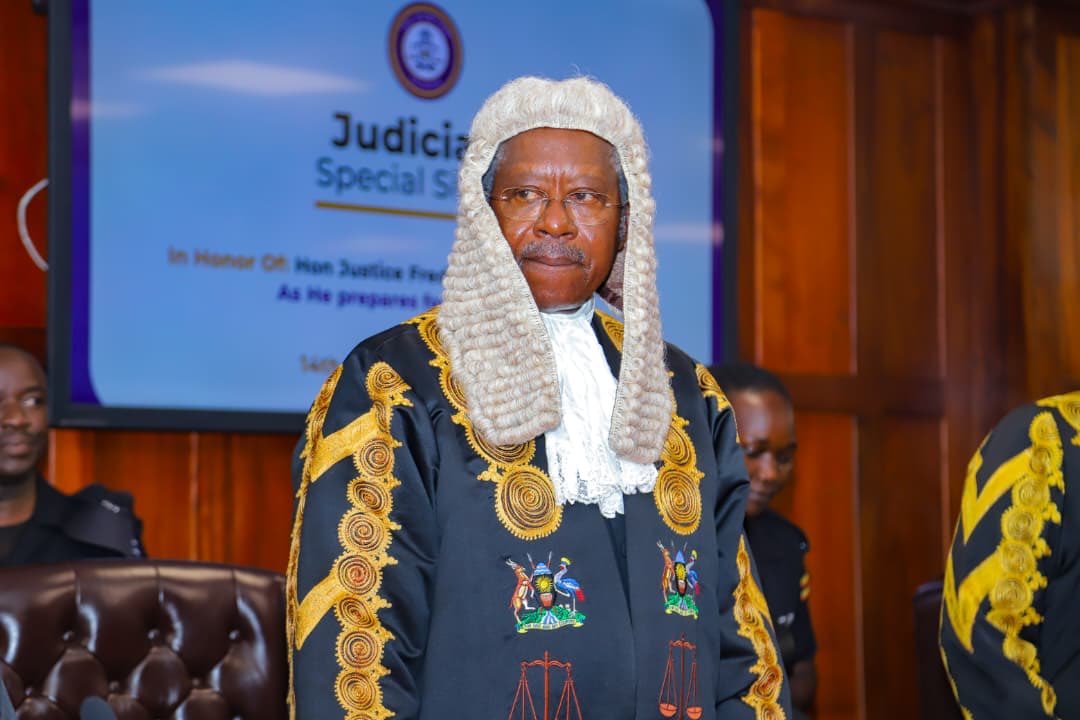
The last time I appeared before Justice Frederick Martins Egonda-Ntende was in a constitutional petition, Mrisho Shafic & Others v Attorney General, before a panel that included the late Justice Kenneth Kakuru and Justice Monica Mugyenyi, now of the Supreme Court.
Having received the cause list a week earlier, and seeing the Attorney General and the Inspector General of Government represented by a team of six lawyers, I began to fret over my preparation. I burned through an entire year’s supply of midnight oil. Appearing before Justices Egonda-Ntende and Kakuru demanded absolute mastery of one’s case; you had to know your petition backwards — Arabic style.
Throughout the proceedings, Justice Egonda-Ntende barely looked at me. He looked into me.
He possessed a rare gift of listening — listening in a way that conveyed deep respect for even the smallest submission, as though he understood your argument more profoundly than you understood it yourself. Every word you uttered seemed to matter to him.
When judgment was eventually delivered in the first phase of the application, he did not agree with my arguments. Yet even in disagreement, he carried a grace that softened the blow and still made counsel feel dignified enough to collect the balance of their legal fees afterward.
If memory serves me right, he remarked: “Counsel for both sides were as helpful as they could.”
It sounded like a rebuke, but one wrapped carefully in courtesy and respect.
That decision would mark the last time a single Justice of the Constitutional Court issued an interim order.
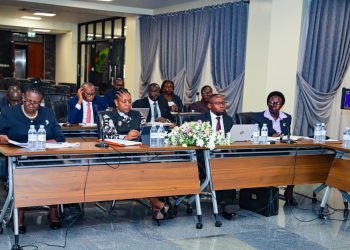
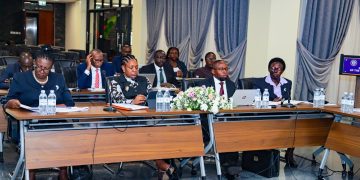
When the late Justice Kakuru passed away, I was serving as Vice President of the Uganda Law Society and was invited to the preparatory meetings for his special sitting and send-off. The meeting took place in the chambers of the then Deputy Chief Justice, Alfonse Owiny-Dollo Butera, now retired, and was attended by judges from various courts, alongside Justice Mwaka representing the Attorney General.
I remained mostly quiet — humbled by the stature in the room, the titles carried by those present, and the brilliance of the ideas being exchanged. Plans were discussed, details refined, and the structure of the event carefully crafted. My contribution was largely limited to dotting the “i’s” and crossing the “t’s.”
But I was not the only quiet person in the room.
Across from the Deputy Chief Justice and seated adjacent to me was Justice Egonda-Ntende. He listened intently, almost as though weighing every contribution on a scale. His face reflected approval and generosity toward each speaker. There was grace in his countenance — the kind that suggested both thoughtfulness and humility.
Then he gently cleared his throat and asked to speak.
What followed was not a challenge to anyone’s ideas, nor a dismissal of any proposal. Instead, he guided the room through the history and significance of special sittings, explaining how such proceedings are often reported in law reports like ordinary cases. He offered insights, context, and thoughtful refinements to the plans before us.
He sprinkled wit, precision, and purpose into every comment.
And as he spoke, the room listened with the same attentiveness he had earlier accorded others. Heads nodded frequently that morning — and for good reason.
I would not dare attempt to fully describe his immense compassion, his discipline, his punctuality, his decency, his respect for colleagues, or the sheer depth of his intellect and wit. Others, more capable than I, may perhaps do justice to those qualities.
But he gave the legal fraternity an enduring gift in the Byamukama case.
There stood a poor man from Kabale, required to report monthly in Masaka as part of his bail conditions. He was not attending trial — merely reporting. Yet when poverty prevented him from walking the long distance or finding transport, and he missed his appearance, he was arrested and thrown back into prison before trial had even commenced.
Justice Egonda-Ntende refused to permit such indignity.
He affirmed that even in capital offences, a magistrate cannot allow a human being to suffer injustice and abuse under the guise of procedure. He held that every court possesses inherent power to prevent the violation of fundamental rights. He ordered Byamukama’s immediate release.
That precedent, though profound, has regrettably been largely ignored.
Like many within legal circles, I hold deep respect for Justice Egonda-Ntende.
My Lord, as you hang up your robes, may you forever be clothed in God’s grace.
The Author is a Registrar of Appeals Tribunal and Vice President Uganda Law Society Emeritus.