






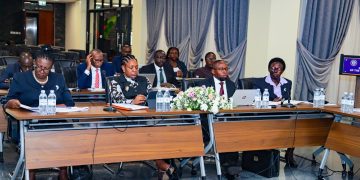






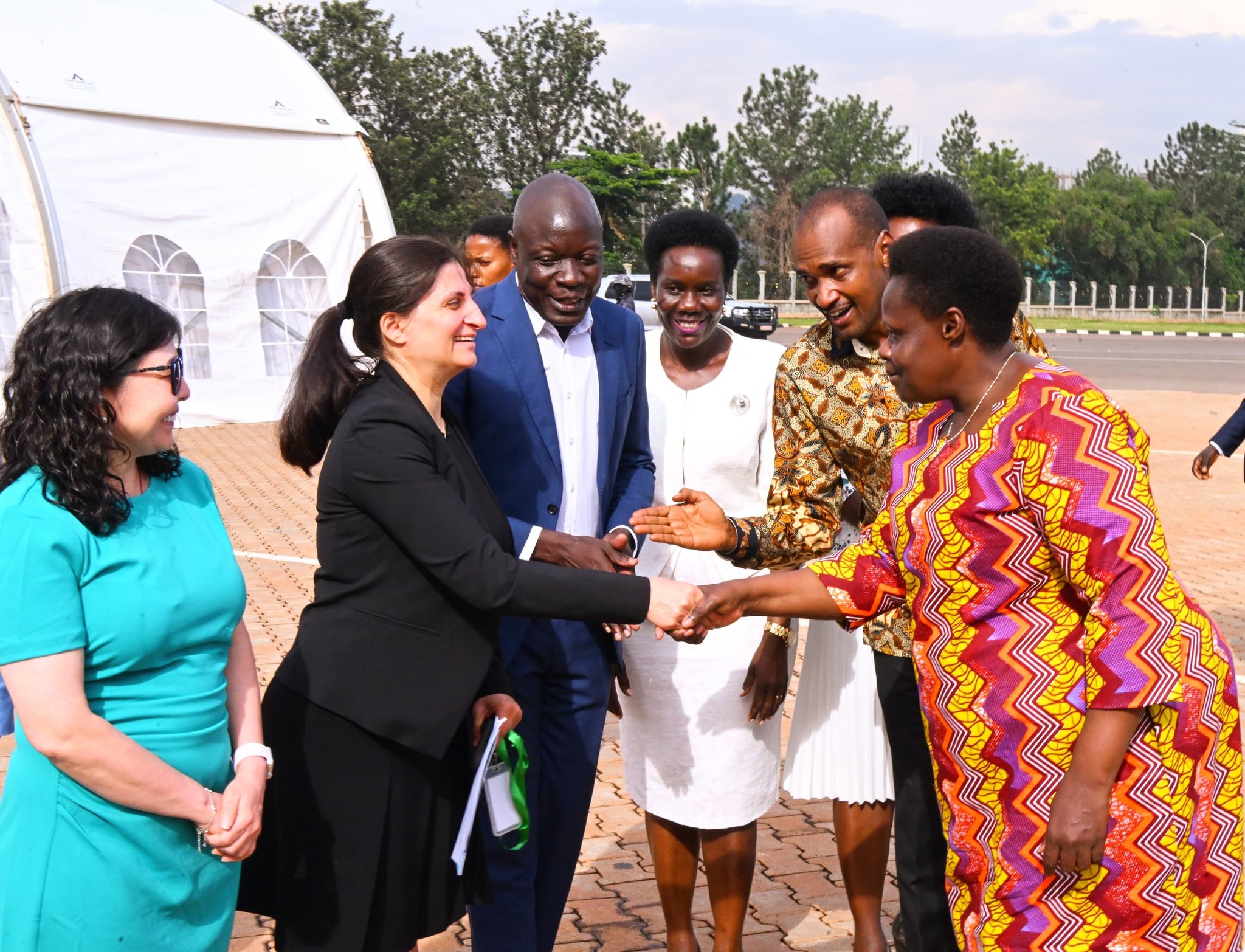
Kololo, Kampala– The Government of Uganda has today handed over vehicles and motorcycles to districts under the Uganda Climate Smart Agricultural Transformation Project (UCSATP) at Kololo Ceremonial Grounds, in a major step to strengthen agricultural extension services.

Presiding over the function, the Vice President, Jessica Alupo emphasised the importance of last-mile service delivery:
“For a long time, limited mobility has constrained last-mile service delivery. These vehicles and motorcycles will now enable our extension staff to reach farmers more efficiently, provide timely technical support, and enhance accountability.”
She further urged strict accountability in the use of public assets:
“These are public resources entrusted to you to serve our farmers. Let us not look for more excuses not to serve the farmers.”
The Minister of Agriculture, Animal Industry and Fisheries, Hon. Frank Tumwebaze highlighted the central role of extension services in agricultural transformation:
“One of the most critical enablers of agricultural transformation is a functional extension system… equipping them with mobility means farmers will now receive the advisory services they need to improve productivity and incomes.”
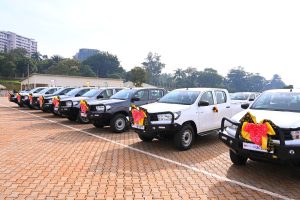
Calling for effective utilisation at district level, the Minister added: “Let us ensure that we give the public value for money by ensuring that the objective of enhancing access to extension services is realised.”
The Permanent Secretary highlighted the scale and impact of the project:
“This project must deliver results to the farmer, not on paper, but in reality. The success will be measured by the number of livelihoods transformed.”
The UCSATP, supported by the World Bank, is a USD 354 million investment targeting 3.9 million
beneficiaries across 69 districts, aimed at increasing productivity, improving market access, and building resilience to climate change.
Government reaffirmed its commitment to ensuring that these investments translate into real impact at household level through improved service delivery, increased production, and higher farmer incomes.