













Mubende – Residents of Mubende District have expressed gratitude to the Sasakawa Africa Association (SAA) for introducing community nutrition initiatives that have not only enabled them to provide balanced meals for their families, but also boosted household incomes and improved their livelihoods.

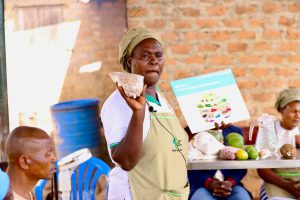
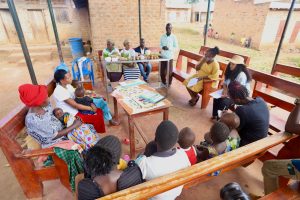
Nakibuule Aisha, a resident of Madudu Village and one of Sasakawa’s Commercial Community-Based Facilitators (CCBF), said that through her Nutrition Model Home—established with support from SAA—she has worked closely with Madudu Health Centre III to significantly reduce cases of malnutrition in the area.
“I was introduced to Sasakawa in 2019 and began sensitizing parents about balanced diets and proper feeding of children. In the eleven local councils where I operate, we used to record over 500 malnutrition cases, but now the number has dropped to below 200, and we hope to reduce it to zero,” she said.
Aisha noted that most malnutrition cases stem from parents’ limited knowledge about appropriate feeding practices.
“Many parents, especially those with children under two years, feed them the same way they feed themselves. Some cook one type of meal without any greens for an entire week. But after sensitization, many have completely changed their meal timetables.”
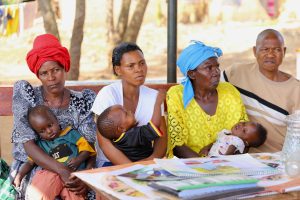
Kitchen Gardens Boost Nutrition and Income
Following community sensitization, many households have established small kitchen gardens where they grow vegetables such as greens, cabbages and pumpkins to supplement their daily meals.
“These gardens not only provide food for families but have also become a source of income for those with larger plots, who sell their surplus harvest,” Aisha added.
Sasakawa’s Contribution
Aisha highlighted that SAA constructed a shade used for nutrition-related meetings and occasionally as an immunization centre. The organization also introduced iron-rich beans and orange-fleshed sweet potatoes, and other varieties to farmer groups, who later shared them with communities that continue to grow them today. Additionally, SAA provided furniture, a solar drier and other equipment to support nutrition activities.
“Personally, I have benefited greatly. I learnt to mix nutritional porridge using millet, silver fish and maize flour, which I sell to parents with malnourished children,” she said. Income from this venture has helped her pay school fees, support her home, and train other community members whose lives have since improved. “Many who once lived in grass-thatched houses now have iron-roofed homes because of nutrition-based farming.”
Health Centre’s Voice
Dr. Ifugute Samuel, Health Assistant at Madudu Health Centre III, confirmed that they receive referrals of severely malnourished children from Aisha and the wider community.
“We work closely with Aisha. Many residents here are not natives and lack land for farming, which leads to domestic conflicts and increased gender-based violence when families struggle to provide food,” he said.
He noted that before Sasakawa’s intervention, malnutrition cases were overwhelming, but referrals have since reduced to about one case every three to six months.
Farmers Testify
Namuli Dorotia, a beneficiary from Madudu, said she previously practiced farming without applying manure. After training, she adopted improved methods that have boosted her yields.
“We used to harvest four bags of maize per acre, but when I planted three acres recently, I harvested six bags per acre. I used the money to buy two cows that now provide manure, and soon they will also give me milk,” she said.
On top of that, Namuli also has gained nutritional knowledge which she used in establishing a house hold vegetable garden which has enabled her to kick mal Nutrition out of her home through since the garden provides vegetables used to supplement their daily meals.
Sasakawa’s Voice
Ms. Ethiopia Tadesse, Communications and Advocacy Officer at the Sasakawa Africa Association, said the ongoing media visit is an annual activity aimed at amplifying Sasakawa’s achievements in improving community well-being.
“As Sasakawa, we have done a lot. We cannot be everywhere, but the media can help share our success stories widely,” she said, adding that similar initiatives are carried out in all African countries where the organization operates.