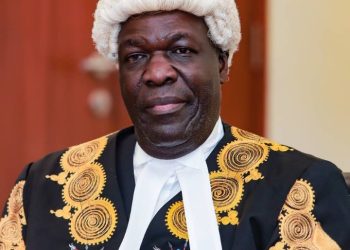







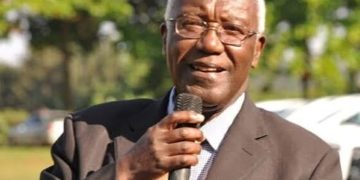




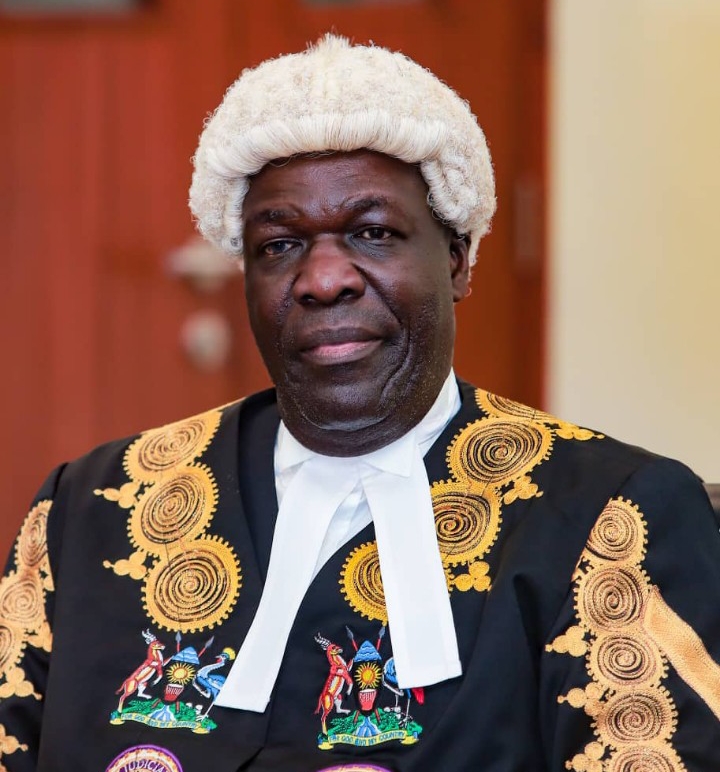
Kampala – Deputy Chief Justice Moses Kazibwe Kawumi has called for the establishment of a national database documenting cases resolved through plea bargaining, saying reliable statistics are critical in determining how the process is helping reduce the backlog of criminal cases in Uganda.

Justice Kazibwe said the Judiciary needs accurate records of cases concluded through plea bargaining and guilty pleas to measure the effectiveness of the intervention, identify gaps and strengthen efforts to ensure timely justice.
He made the remarks while chairing a meeting of the Case Management Committee at Level 6 of the Court of Appeal Building, where members reviewed proposals on mediator accreditation, the Committee’s work plan and the draft Judicial Handbook on the Law and Practice of Costs in Uganda.
On plea bargaining, the Deputy Chief Justice proposed that the Uganda Prisons Service provide statistics on cases resolved through plea bargaining and guilty pleas recorded over the past two years.
He said the information would enable the Judiciary to assess the impact of plea bargaining on the criminal justice system and determine whether additional measures are needed to improve its effectiveness.
Justice Kazibwe also emphasised the need to coordinate with the taskforce chaired by the Principal Judge to ensure that the Committee’s interventions complement ongoing efforts to address prolonged pre-trial detention in Uganda.
Mediator Accreditation
The meeting also addressed the accreditation of court mediators, with members calling for clear procedures to ensure that only competent and qualified individuals are entrusted with resolving disputes through mediation.
Justice Kazibwe noted that the quality of mediators directly influences the outcomes of mediation and the confidence court users place in the process.
Members proposed expediting the processing of the growing number of accreditation applications and developing an assessment matrix to guide the vetting process. They also recommended establishing clear performance evaluation criteria for accredited mediators, particularly when their accreditation is due for renewal.
With Kampala facing a shortage of mediation facilities, the Committee explored alternative solutions, including renting the former Court of Appeal premises at Twed Towers to accommodate court mediation services.
Other proposals included expanding online mediation and establishing a dedicated mediation centre attached to the Judiciary to provide a more accessible and convenient environment for resolving disputes.
Judicial Handbook on Costs
The Committee also reviewed the draft Judicial Handbook on the Law and Practice of Costs in Uganda, with Justice Kazibwe urginng members “I encourage members to approach this exercise with the objective of producing a practical and authoritative reference tool that will promote consistency and sound judicial practice in the taxation of costs,” he said.
Members agreed to submit their comments by early January 2027 to enable the handbook to be finalised.
The Deputy Chief Justice further called for continued development of simplified bench books and case management manuals tailored to different categories of cases, saying the Judiciary is targeting approximately 700 simplified reference books in line with the 2017 Case Backlog Reduction Strategy.
He said the Committee’s work under Regulation 22 of the Administration of the Judiciary (Establishment of Committees) Regulations should provide judicial officers with practical guidance, improve consistency in case management and generate reliable data to measure the effectiveness of reforms.
Performance Reviews and Case Management
Reporting on performance reviews for the first two quarters of the 2026/2027 financial year, Justice Kazibwe said quarterly reviews had been conducted with the Office of the Chief Registrar and the Lower Bench, while reviews involving the High Court had been chaired by him.
He noted that the Court of Appeal and Supreme Court continue to hold fortnightly meetings to identify challenges affecting the timely disposal of cases and develop solutions to improve performance.
The Deputy Chief Justice also acknowledged progress in criminal justice initiatives supported by Pepperdine University at Mbale and Gulu Remand Homes.
The Deputy Chief Justice also acknowledged progress in criminal justice initiatives supported by Pepperdine University at Mbale and Gulu Remand Homes.
The Committee’s work plan was presented during the meeting, with members agreeing that changes in deployment and the elevation of some members necessitated adjustments to the Committee’s composition and its subcommittees.
The Secretariat is expected to circulate an updated membership list, while an induction programme is planned for the next quarter to help members understand their responsibilities and ensure continuity in the Committee’s work.
At the next meeting, the Alternative Dispute Resolution and Alternative Justice System Subcommittee is expected to present a report on the outcomes of its interventions, achievements and challenges encountered.
Justice Kazibwe said the Committee’s work should ultimately translate into practical improvements in the administration of justice, helping courts resolve cases more efficiently, reducing delays and strengthening public confidence in the Judiciary.