





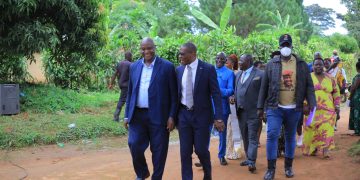








Mukono– The Ministry of Health has trained Community-Based Surveillance (CBS) supervisors on the use of the Electronic Community Health Information System (E.C.H.I.S), a digital tool designed to improve real-time reporting of health and environmental events from communities.

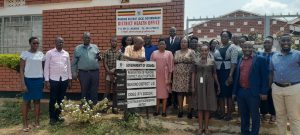
The training, held at the Mukono District Health Department Boardroom, brought together Health Assistants, Health Inspectors, and members of the District Health Team (DHT), led by the District Health Officer, Dr. Mulindwa Stephen.
The initiative aims to strengthen early detection and reporting of health threats such as human sicknesses, animal illnesses, floods, and other emergencies that may arise within communities.
The system is especially critical for preventing data loss and ensuring that information collected by Village Health Teams (VHTs) reaches national surveillance centers accurately and on time.
According to consultants from UNICEF’s Community-Based Services Division, the training aligns with the National Community Health Strategy 2023, which highlights the global shift championed by the World Health Organization toward digital community health systems. In 2024, the Ministry of Health, with support from development partners including Global Fund, UNICEF, and others, adopted E.C.H.I.S as a national tool. To date, more than 30 districts have transitioned to digital reporting through their VHT structures.
UNICEF, in partnership with the Republic of Korea, is now piloting the integration of Community-Based Surveillance into E.C.H.I.S. The pilot targets Mukono, Kampala, and Wakiso, enabling VHTs and their supervisors to report potential health threats instantly and improve the country’s capacity for early warning and response.
Speaking during the training, Ms. Sandra Namakula from the Ministry of Health’s Division of Health Information, emphasized that the session was designed to equip supervisors with the skills needed to further train VHTs in their respective sub-counties. She noted that the digital approach will ensure that data collected at the community level is preserved, accurately submitted, and efficiently used for national surveillance and planning.
Mukono District Biostatistician, Ivan Mwesigwa, added that the workshop prepares VHT supervisors to guide their teams in using E.C.H.I.S to capture and escalate health events from the grassroots. He highlighted that once VHTs submit verified reports, supervisors will confirm and transmit them to the national level to trigger timely action where necessary.
The introduction of E.C.H.I.S into Community-Based Surveillance marks a significant step toward modernizing Uganda’s public health reporting system. By empowering VHTs and supervisors with digital tools, the Ministry of Health supported by UNICEF and other partners is strengthening early detection, enhancing data accuracy, and improving national preparedness for potential health threats. Mukono District is now positioned to play a leading role in this digital transformation, ensuring that no critical community health information is lost and that responses to emergencies are swift and well-coordinated.