














The East African Court of Justice (EACJ) has ruled that appointing a serving judicial officer to another civil service position is not inherently illegal, provided the officer takes leave before assuming the new role.

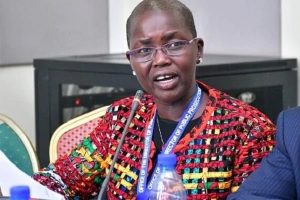
The ruling came in a case challenging the appointment of Justice Jane Frances Abodo as Director of Public Prosecution.
The court dismissed the application, stating that, unlike what the Legal Brain Trust, the applicant argued, the mere appointment of a serving judge as DPP does not automatically conflate the judiciary and the executive. The judges emphasised that such a claim must be substantiated with evidence, not merely alleged.
“The Respondent’s evidence, Judge Abodo’s Affidavit…and appointment letter demonstrate that she was granted special leave…, suspending her judicial duties upon assuming the DPP role.
This leaves formalised pre-Administration of Judiciary Act 2020, aligns with Uganda’s evolving legal framework, as Section 20 retroactively legitimises such transitions. The Applicant’s insistence on resignation, rooted in Kasango and Jim Muhwezi cases (supra), overlooks Article 120(2) of the Constitution, which deems the DPP eligible if “qualified to be appointed a judge of the High Court.”
Requiring resignation for a sitting judge, already exceeding this threshold, imposes an extra-constitutional burden, undermining the provision’s plain meaning and legislative flexibility,” the court ruled.
In its application, Legal Brain Trust, a not-for-profit organisation that advocates for democracy, human rights, and the rule of law, through its lawyer, Isaac Ssemakadde, argued that the appointment of Justice Abodo on April 17, 2020, was not in compliance with East African Community Treaty obligations and Ugandan law.
The application alleged that President Yoweri Kaguta Museveni acted unlawfully by appointing Justice Abodo, a sitting Judge of the High Court of Uganda, as DPP without a lawful recommendation from the Public Service Commission.
It also alleged that the Uganda Judiciary and Judicial Service Commission unlawfully acquiesced in releasing Justice Abodo from her judicial duties, thereby enabling her to engage in extrajudicial activities within the Executive branch, contrary to constitutional norms.
The application further alleged that Justice Abodo neither applied through a transparent process nor competed fairly for secondment to the DPP position, as the opportunity was not extended to other judges.
The application also argued that Justice Abodo failed to resign her judicial office before assuming the DPP role, yet simultaneously being a member of the Judicial and Executive branches is impermissible.
“Ugandan law, including the Uganda Code of Judicial Conduct and constitutional provisions, prohibits judicial officers from engaging in full-time extrajudicial roles, such as the DPP- ranked third in the order of precedence under the Uganda Advocates Act, that impair judicial duties, create an appearance of impropriety, or compromise judicial independence,” the application reads in part.
In response, the Attorney General, the official respondent in matters where the government is sued, called upon the court to dismiss the suit because the appointment of Abodo was lawful under the constitution of Uganda and with the EAC Treaty obligations.
“All actions, including the decision by the President to appoint Judge Jane Frances Abodo as DPP, her acceptance of this appointment, her subsequent application for special leave of absence from Judicial Service instead of resignation, and the granting of that leave, were carried out lawfully and in accordance with established legal provisions…There exists no legal impediment barring a qualified judicial officer from being appointed to the position of Director of Public Prosecutions,” the Attorney’s response reads in part.
He also contended that the position of Director of Public Prosecutions is not part of the Executive branch of Government, and consequently, there is no statutory requirement for a sitting High Court Judge to resign upon being appointed to the role of DPP. In their decision, the judges held that the Administration of Judiciary Act 2020 (Section 20) allows a judicial officer, with the approval of the Judicial Service Commission, to be granted leave of absence to serve in another office in the public service.
“The Applicant’s fair hearing concerns that a judge-DPP blurs prosecutorial and judicial roles, risking bias, rests on a theoretical conflict other than concrete evidence of prejudice… Judicial independence under Article 6(d) demands practical impairment, not speculative leaps. The Applicant cites no instance where Judge Abodo’s DPP tenure influenced judicial proceedings or compromised litigants’ rights, a burden the Applicant ought to have discharged,” the court held.
The panel that heard the matter included Justices: Yohane Masara, Richard Wabwire Wejuli, Richard Muhumuza, Dr Leonard Gacuko, and Kayembe Ignace Rene Kasanda. This ruling comes months after Justice Abodo bounced back to the Judiciary following her appointment as Principal Judge.